
Why Does Water Pool on a Flat Roof? Causes, Problems and What to Do About It
Seeing a pool of water sitting on a flat roof after rainfall can be concerning, particularly if it remains there long after the rest of the roof has dried.
A small amount of temporary surface water does not automatically mean the roof has failed. However, persistent standing water can indicate a drainage, surface or roof-fall problem that deserves investigation.
Receive your free quote
The key is to understand why the water is staying there.
Aren’t Flat Roofs Supposed to Be Flat?
Despite their name, flat roofs should not normally be completely level.
They are generally constructed with a slight fall designed to guide rainwater towards a gutter, outlet or other drainage point.
This allows the roof to shed water rather than holding it indefinitely.
Flat roofs are commonly found on:
- Extensions
- Garages
- Porches
- Dormers
- Outbuildings
- Commercial buildings
If water regularly remains in the same areas, something may be preventing the drainage system from operating as intended.
Blocked Drainage Is a Common Cause
One of the simplest causes of standing water is a blockage.
Leaves, moss, dirt and other debris can accumulate around drainage outlets, particularly during autumn.
Once an outlet becomes restricted, water has nowhere to go.
This is particularly important on roofs close to trees, where debris can build up surprisingly quickly.
Keeping outlets clear is therefore an important part of basic flat roof maintenance.

The Roof May Have an Inadequate Fall
Sometimes water pools because the roof surface does not guide it effectively towards the drainage point.
This could be related to the original construction or changes that have occurred over time.
A low area can effectively become a shallow basin.
Every time it rains, water returns to the same spot.
The appropriate solution depends on how extensive the problem is and whether it is contributing to deterioration elsewhere.
A professional assessment of the flat roofing system can help determine whether localised work or a more substantial solution is needed.
Roof Decking Can Change Over Time
The material underneath a flat roof covering also matters.
If parts of the underlying decking deteriorate or move, the surface above may become uneven.
This can create new low points where water begins to collect.
Soft or unusually uneven areas should not be ignored, particularly when they appear alongside leaks or visible surface damage.
Can Standing Water Damage a Flat Roof?
Persistent ponding can place additional demands on a roofing system.
Water remaining on the surface means that joints, seams and coverings stay wet for longer periods.
If the roofing material already has a small defect, prolonged contact with water may expose that weakness.
Signs that deserve investigation include:
- Cracking
- Splitting
- Blistering
- Lifting materials
- Failed joints
- Soft areas
- Internal staining
- Recurring leaks
The presence of standing water does not automatically mean that replacement is necessary, but it can be an indication that the roof should be checked.
Why Does My Flat Roof Leak Only During Heavy Rain?
Some defects only become obvious when the volume of water increases.
During light rain, water may drain away before it reaches a vulnerable joint.
During prolonged or heavy rainfall, pooling may become deeper and remain in contact with weak areas for longer.
Water can then pass beneath the covering and travel before appearing inside.
This explains why the internal damp patch is not necessarily directly below the original fault.
Can a Pooling Flat Roof Be Repaired?
Potentially, yes.
A localised problem may be repairable where the surrounding roof remains in reasonable condition.
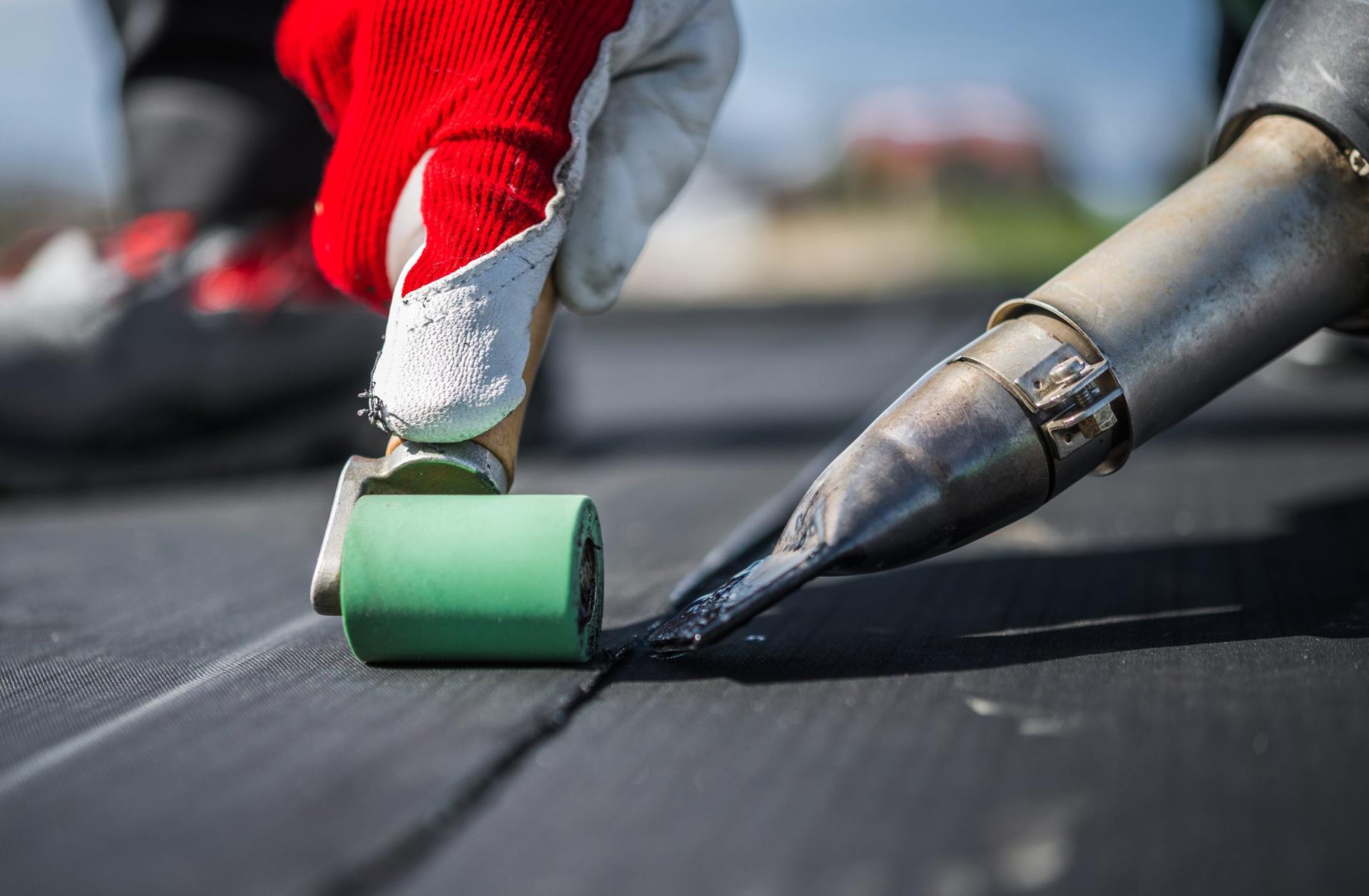
Possible repairs could involve addressing damaged materials, joints, drainage areas or another identified defect.
However, repeated patching may become less practical when the whole roof has widespread deterioration.
Bramwell Roofing Sussex provides both repairs and replacement through its flat roofing services, allowing the solution to reflect the condition of the individual roof.
When Might Replacement Be More Appropriate?
Replacement may be worth considering when there are multiple problems rather than one isolated defect.
Examples include:
- Frequent leaks
- Extensive cracking
- Widespread blistering
- Significant standing water
- Soft or uneven sections
- Multiple lifting areas
- Repeated previous repairs
- General deterioration across much of the roof
The decision should be based on the overall condition rather than one puddle alone.
Flat Roofs and Sussex Weather
Flat roofs in Sussex can face different pressures depending on location.
Properties closer to the coast may be more exposed to strong winds and driving rain. Inland properties can experience problems from overhanging trees, leaf debris and moss.
Autumn and winter rainfall can also make existing drainage weaknesses much more obvious.
If you notice water continuing to sit on your garage, extension or commercial roof long after rainfall has stopped, it is worth understanding why.
Arrange a Flat Roof Assessment
Standing water is one of those roofing issues that is easier to address before an internal leak develops.
If your flat roof regularly holds water, has begun leaking or shows signs of deterioration, call Bramwell Roofing Sussex on 07598 001 200 to discuss an assessment.
Frequently Asked Questions
Is standing water always a problem on a flat roof?
Not necessarily, but persistent pooling should be investigated if water regularly remains for long periods.
Why has my flat roof suddenly started collecting water?
Blocked drainage, surface movement or deterioration beneath the roof covering may all contribute.
Can leaves cause ponding?
Yes. Leaves and debris can restrict outlets and prevent rainwater draining away properly.
Does pooling mean I need a new flat roof?
No. Localised problems may be repairable. Replacement is generally considered when deterioration is more widespread.
Should I clear a flat roof myself?
Only where this can be done safely without accessing a dangerous roof surface. Professional help is safer where access is difficult.