
How Often Should You Clean Your Gutters – and What Happens If You Don’t?
Gutters are one of the least glamorous parts of a property, but they perform an essential job every time it rains.
They collect water from the roof and guide it towards downpipes so it can be carried safely away.
Receive your free quote
When they become blocked, the water has to go somewhere else.
That is why gutter cleaning should form part of regular property maintenance, particularly during and after autumn.
How Often Should Gutters Be Cleaned?
There is no single schedule that applies to every property.
How quickly gutters fill depends on the surrounding environment.
A house with several overhanging trees may need attention more frequently than an open property with little nearby vegetation.
Factors include:
- Trees
- Moss on the roof
- Birds
- Local weather
- Roof size
- Gutter design
- Previous blockage history
A sensible approach is to check them periodically and pay particular attention after leaves have fallen or after severe weather.
What Actually Blocks a Gutter?
Common gutter debris includes:
- Leaves
- Moss
- Twigs
- Dirt
- Roof debris
- Plant growth
- Material deposited by birds
Small quantities may not initially create a problem.
Over time, however, the material can collect into a dense blockage.
Water then backs up behind it.
Overflowing Gutters Can Soak Exterior Walls
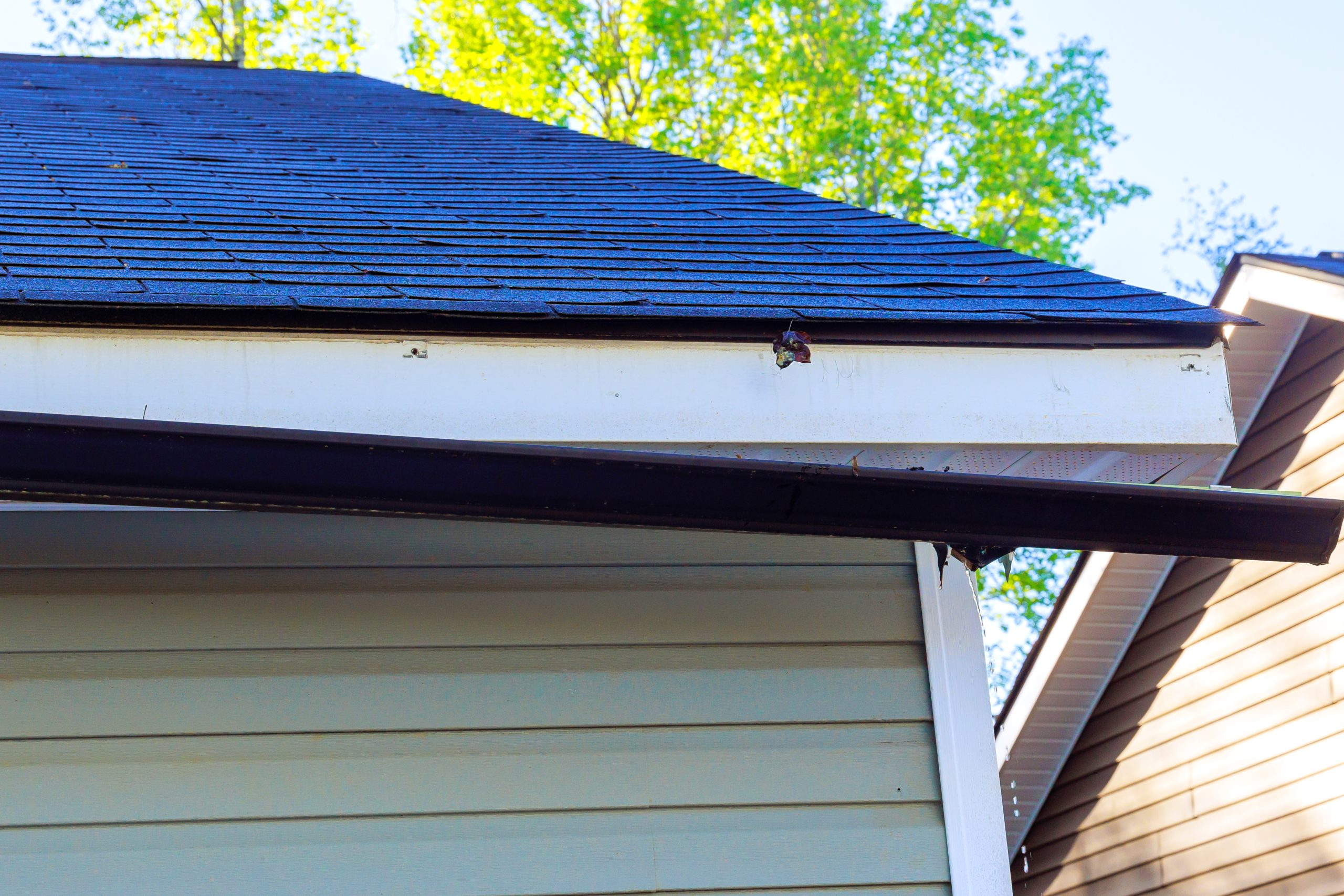
The most obvious result of a blockage is water pouring over the edge.
Instead of being directed into a downpipe, rainfall can run down the outside wall.
Repeated saturation may contribute to staining and damp conditions.
The problem may be particularly noticeable during prolonged or heavy rainfall when the gutter suddenly needs to handle much more water.
Fascias Can Also Be Affected
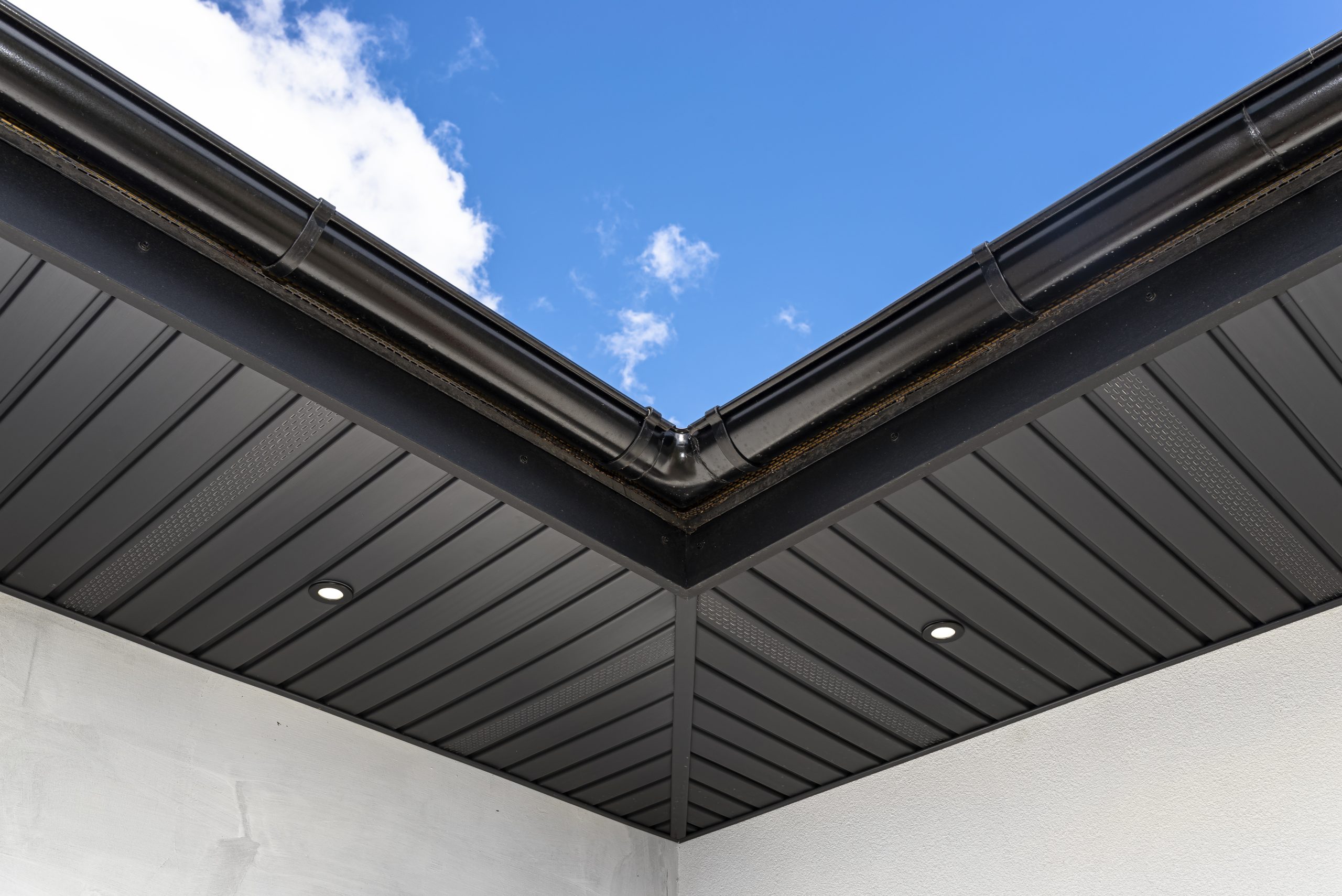
The fascia board sits behind the guttering on many properties.
When a gutter repeatedly overflows, this area can remain wet for extended periods.
Timber fascias can eventually deteriorate if they are repeatedly exposed to moisture.
A damaged fascia may then become less effective as a fixing point for gutter brackets.
This creates a cycle:
blocked gutter → overflow → fascia damage → loose gutter → poorer drainage.
If roofline materials are already showing deterioration, Bramwell Roofing Sussex provides soffit and fascia repairs and replacement.
How Do I Know My Gutters Are Blocked?
Watch what happens when it rains.
Common signs include:
- Water spilling over the side
- Persistent dripping
- Water running behind the gutter
- Plants growing from the gutter
- Visible moss or leaves
- Sagging sections
- Exterior staining
- Water collecting near the building
You may also notice that one downpipe appears to carry very little water compared with the amount falling onto the roof.
Why Do Gutters Sag?
Blockages can add considerable weight.
A gutter filled with wet leaves, moss and standing water is much heavier than an empty one.
Over time, brackets can loosen or sections may begin to sag.
Once the gutter loses its correct alignment, water may sit in low areas instead of travelling towards the downpipe.
That creates further opportunities for overflowing.
Cleaning Cannot Fix a Broken Gutter
It is important to separate maintenance from repair.
Clearing leaves from a gutter will not fix:
- A cracked section
- A leaking joint
- A broken bracket
- A damaged downpipe
- Incorrect alignment
- A rotten fascia
This is why cleaning provides a useful opportunity to identify other defects.
Bramwell Roofing Sussex includes gutter maintenance within its wider roofing services.
Are Gutters Part of Roof Maintenance?
Absolutely.
A roof does more than stop rain falling directly into a building.
It also needs to manage where that rainwater goes next.
Tiles, slates or flat roofing direct water towards the perimeter. Guttering then takes over.
If this second stage fails, an otherwise sound roof can still be associated with water problems around the building.

Why Autumn Is a Key Time
October and November can be particularly challenging because leaves are falling at the same time as wetter weather becomes more frequent.
A gutter that worked perfectly well in September may become obstructed within weeks if the property is surrounded by trees.
This makes autumn a sensible time to keep an eye on drainage.
Gutter Maintenance Across Sussex
Sussex contains everything from leafy inland properties to exposed coastal homes.
The amount and type of debris can therefore differ enormously from one location to another.
Rather than relying entirely on a fixed timetable, respond to your property’s surroundings and the warning signs you can actually see.
If gutters are blocked, leaking, sagging or pulling away from the roofline, call Bramwell Roofing Sussex on 07598 001 200 to discuss the problem.
Frequently Asked Questions
How often should gutters be cleaned?
It varies. Properties close to trees may need more frequent cleaning, particularly during autumn.
What happens if gutters stay blocked?
Water can overflow, contributing to exterior staining and damage around fascias and roof edges.
Can blocked gutters cause damp?
Overflowing water can contribute to damp conditions around exterior walls and vulnerable building details.
Why is there a plant growing from my gutter?
Accumulated organic debris can create an environment in which seeds germinate. It is a clear sign the gutter needs attention.
Should downpipes be checked too?
Yes. A clear gutter will still struggle to drain if the downpipe is blocked or damaged.